Engagement: Experimental driving-simulation research platform
Not a standard control-training simulator, but an experimental platform: a Gilgamesh driving environment built to study how driving situations affect a driver’s emotions and biometrics.
The Challenge
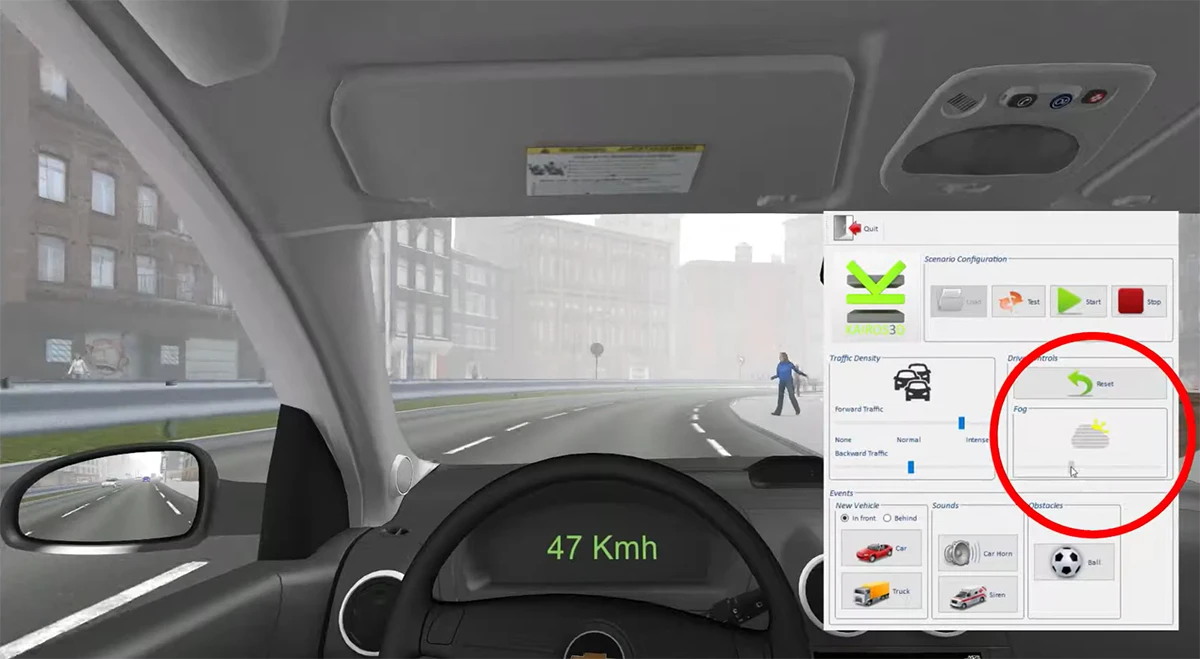
The client needed a system combining three elements: a realistic, engaging virtual driving experience; an external console to trigger events during the session; and integration with biometric sensors monitoring the driver.
The aim was a controlled, repeatable environment where researchers could expose drivers to specific conditions — attention-demanding events, sudden hazards, emergencies — and analyze the physiological response.
The Kairos3D Solution
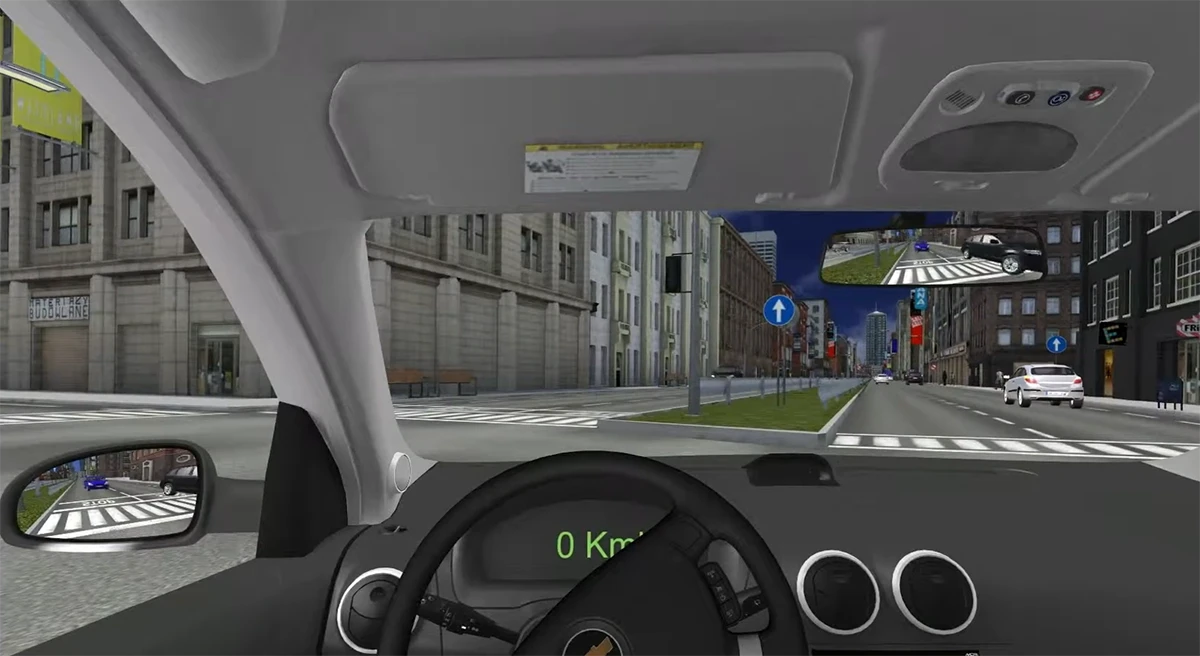
Kairos3D built a Gilgamesh-based driving simulator with a vehicle-style seat for realism and an external console for researchers to trigger predefined events dynamically. Scenario events are synchronized with biometric acquisition, so each physiological variation can be interpreted against exactly what the driver was experiencing at that moment. The console makes experiments repeatable and configurable, enabling comparison of responses across users, events and conditions.
Results
Controlled emotional conditions — Attention, danger and emergency events generated safely and repeatably.
Event-to-biometric correlation — Physiological responses mapped to precise simulation moments.
Realistic setup — Vehicle-style seat plus multi-sensor monitoring.
Repeatable human-factors research — Comparable scenarios across participants.
Design insight — Findings feed HMI, safety systems and driver-assistance concepts.
Why Kairos3D
Beyond training and asset visualization, Gilgamesh works as a flexible research platform — letting the client reproduce risky driving situations without real danger and connect biometric data to controlled events, informing future vehicle and safety design.